
Let’s be honest, most of us aren’t walking around worrying about invisible chemicals. Life is busy. You’re thinking about your family, your work, and maybe your health if something feels off. But here’s the thing: some of the biggest impacts on our well-being come from things we don’t even see.
Forever chemicals fall right into that category.
They’re in everyday items, things you’ve probably used for years without a second thought. Your frying pan, your takeout container, even the water coming out of your tap. And the tricky part? They don’t just pass through your body and disappear. They stay.
Once you really understand that, it changes how you look at your environment. It’s not about fear, it’s about awareness. Because when you know better, you naturally start choosing better.
Patti’s story is something many people can relate to. It didn’t start with glass art; it started with questions. Questions about health, about what was being used daily, about why certain things didn’t feel right.
That curiosity turned into a deeper understanding of how toxins affect the body. And from there, everything shifted. Choices became more intentional. Materials mattered more. Even the idea of “beauty” changed; it became about what feels good, not just what looks good.
That’s really what Soul & Silica represents. It’s not just recycled glass, it’s a reflection of a lifestyle that values health, simplicity, and conscious choices.
Forever chemicals, also known as PFAS, are manufactured chemicals designed to make life easier. They repel water, resist stains, and handle heat like a pro. Sounds useful, right? That’s why they became so popular.
They’ve been used for decades in things like:
The problem isn’t what they do, it’s what they don’t do. They don’t break down, not in nature, not in your body.
These chemicals are designed to be incredibly stable. Think of them like something that just refuses to fall apart, no matter what you throw at it.
Once they’re out there in the air, water, or your system, they stick around. That’s why they’re called “forever” chemicals.
And here’s the part that hits differently: even small, repeated exposure adds up over time. It’s not about one moment; it’s about the slow build.
This is where it gets a little uncomfortable, because PFAS aren’t rare; they’re everywhere.
You’ll find them in:
It’s not about throwing everything away. It’s about becoming aware so you can start making swaps when it feels right.
One of the biggest sources of exposure is actually something you use every single day: water.
In many places, drinking water contains traces of PFAS due to industrial pollution. Food packaging is another sneaky source, especially anything designed to resist grease.
You don’t see it. You don’t taste it. But over time, it adds up.
Your body is amazing, but it’s not perfect at eliminating everything. PFAS can stay in your system for years. That means each exposure adds a little more to what’s already there.
It’s kind of like clutter in your home. One item isn’t a problem. But over time, it builds until you feel its weight.
That’s how many people describe toxic load: it’s not sudden, it’s gradual.
These chemicals don’t just affect people. They move through water, soil, and wildlife. They travel far beyond where they started.
So even if you’re trying to live clean, you’re still part of a bigger system. That’s why conscious choices matter not just for you, but for everything around you.
There’s growing research linking PFAS exposure to certain cancers, especially kidney and testicular cancer. It’s not about panic, but about paying attention.
These chemicals can interfere with how cells behave, and over time, that can lead to bigger health issues.
This is where it becomes very personal.
PFAS can disrupt hormones, which affects everything from energy levels to fertility. Many women dealing with imbalances don’t even realize that environmental toxins could be part of the picture.
Your hormones are delicate. Even small disruptions can have noticeable effects.
Your immune system is your body’s protection. PFAS exposure has been linked to weaker immune responses, meaning your body may not fight off illness as effectively.
And when your immune system is off, everything feels off.
Children are more sensitive to these chemicals, and exposure can impact development, learning, and growth.
Even more concerning, these chemicals can cross the placenta from mother to baby. So the impact isn’t just now, it’s generational.
Here’s the good news: you don’t have to be perfect.
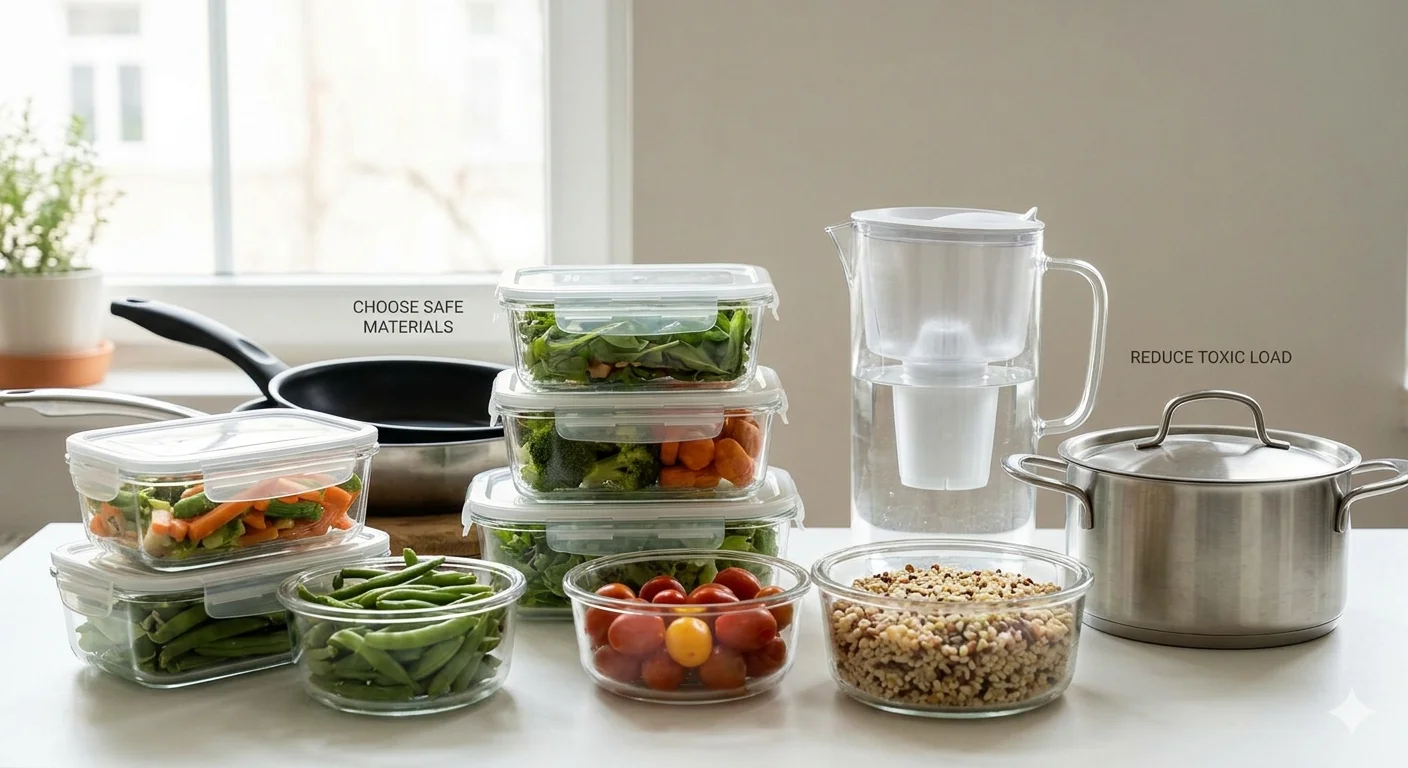
Start with simple swaps:
It’s not about doing everything at once. It’s about moving in the right direction.
Your home should feel safe, calming, and clean, not just visually, but energetically and physically.
When you start choosing materials that don’t carry hidden toxins, you’ll notice a difference. It’s subtle, but it’s real.
There’s something beautiful about taking something discarded and giving it a new purpose.
That’s what Soul & Silica does. But it’s more than recycling, it’s about intention. It’s about choosing materials that are safe, sustainable, and meaningful.
Every piece tells a story not just of creativity, but of conscious living.
Glass doesn’t leach chemicals. It doesn’t react with what you put in it. It’s one of the cleanest materials you can use.
And when it’s transformed into art, it becomes more than functional; it becomes something you connect with.
You can’t control everything. But you can control what you bring into your space.
Reducing your toxic load isn’t about fear; it’s about feeling better, clearer, lighter.
At the end of the day, this is about empowerment.
When you understand what’s around you, you can choose differently. And those choices, no matter how small, create real change over time.
Forever chemicals might sound like a distant issue, but they’re actually part of everyday life. The real shift happens when you become aware of them and start making choices that align with your well-being. You don’t need to overhaul your life overnight; just start small, stay curious, and trust that those changes matter. Surrounding yourself with safer, more intentional materials, like glass, can be a simple yet powerful step toward a healthier, more balanced life.
Not worried but aware. Small, consistent choices can significantly reduce your exposure.
Yes, glass is one of the safest materials and doesn’t release harmful chemicals.
It can, but very slowly. That’s why reducing exposure matters.
Switch your drinking water container to glass and be mindful of non-stick cookware.
Absolutely. What you surround yourself with plays a big role in how you feel over time.